

Introduction:
Graphic design is a creative and practical career that combines visual communication, technology, and problem-solving. From logos and advertisements to websites, social media graphics, packaging, and brand identities, graphic designers create visual content that helps people understand ideas and recognize businesses.
If you want to describe a graphic designer, the simplest explanation is that a graphic designer is a creative professional who uses visual elements such as typography, colors, images, shapes, and layouts to communicate a message or solve a visual communication problem.
But becoming a graphic designer involves more than knowing how to use design software. You need creativity, visual awareness, communication skills, an understanding of design principles, and the ability to turn a brief into an effective final design.
This guide explains what graphic designers do, whether you need to draw, how to become your own graphic designer, what you should know, and what skills can help you build a successful career.

Table of Contents
What Is a Graphic Designer?
A graphic designer is someone who creates visual communication for a particular purpose, audience, or brand.
Graphic designers take information or ideas and transform them into visual compositions. They may work on digital or printed materials depending on their specialization.
A typical graphic designer may create:
- Logos and brand identities
- Social media graphics
- Website graphics
- Advertisements
- Posters and flyers
- Business cards
- Brochures
- Packaging
- Presentations
- Digital illustrations
- Marketing materials
- Infographics
The role combines creativity with strategy. A design may look attractive, but it also needs to communicate the right message and serve its intended purpose.
How to Describe a Graphic Designer
To describe a graphic designer professionally, you can think of them as a visual problem solver.
A graphic designer receives information about a project, understands the target audience and objective, and then develops a visual solution.
For example, if a company wants to promote a new service, the designer may create a social media advertisement. The designer must decide which information deserves the most attention, what imagery should be used, which colors fit the brand, and how the content should be organized.
This means graphic designers need both creative thinking and practical decision-making skills.
What Does a Graphic Designer Do?
The exact responsibilities depend on the job or specialization, but common tasks include:
- Understanding a client’s requirements.
- Reviewing the design brief.
- Researching the target audience.
- Developing creative concepts.
- Selecting typography and colors.
- Creating layouts and visual compositions.
- Using graphic design software.
- Reviewing and revising designs.
- Preparing final deliverables.
- Communicating with clients or team members.
A professional designer does not simply start designing randomly. The process usually begins with understanding the problem that the design needs to solve.
Description for a Graphic Designer
A strong description for a graphic designer can focus on creativity, communication, technical ability, and problem-solving.
For example, a professional graphic designer can be described as:
A creative visual communication professional who combines typography, imagery, color, layout, and design principles to create effective visual content for businesses, organizations, and audiences.
This description works because it explains both the creative and practical sides of the profession.
Do You Have to Draw to Be a Graphic Designer?
No, you do not have to be an excellent hand-drawer to become a graphic designer.
Drawing can be useful for certain areas of design, particularly illustration, character design, concept art, and some branding projects. However, many graphic design tasks focus more heavily on layout, typography, color, composition, branding, image editing, and digital design.
For example, a designer creating a business brochure may not need to draw anything by hand. Instead, they may arrange photographs, headlines, icons, colors, and supporting information into a clear layout.
What matters most is understanding how visual elements work together to communicate effectively.
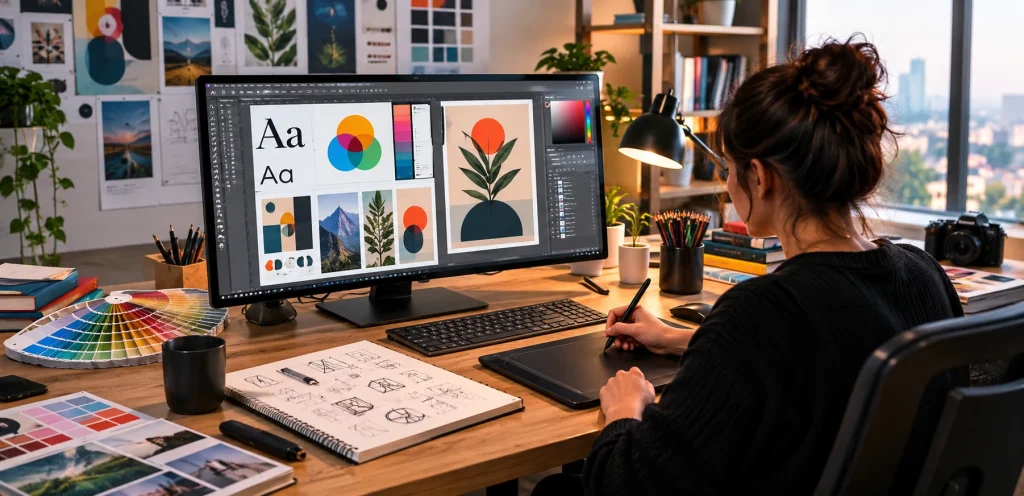
Can Anyone Do Graphic Design?
Almost anyone can learn graphic design, but becoming highly skilled requires practice, study, and experience.
You do not necessarily need to start with formal artistic training. Beginners can learn design principles, practice with accessible tools, study professional examples, and gradually develop their visual skills.
However, learning graphic design is different from simply creating attractive images.
Professional designers understand:
- Visual hierarchy
- Typography
- Color theory
- Composition
- Branding
- Audience needs
- Design principles
- File formats
- Digital and print requirements
- Client communication
With consistent practice, beginners can develop these skills over time.
How to Be Your Own Graphic Designer
If you want to be your own graphic designer, you can start by learning the fundamentals and practicing with real projects.
A practical learning process looks like this:
Step 1: Learn Design Fundamentals
Start with typography, color, contrast, alignment, balance, spacing, composition, and visual hierarchy.
These principles provide the foundation for almost every type of graphic design.
Step 2: Choose a Design Tool
Learn one design application properly instead of trying to master every tool at once.
Depending on your goals, you might explore tools for image editing, vector design, page layout, interface design, or simple online graphics.
Step 3: Study Professional Designs
Look at logos, advertisements, websites, packaging, posters, and social media graphics.
Instead of only asking whether a design looks good, analyze why it works.
Ask yourself:
- What do I notice first?
- Why does the headline stand out?
- How are colors being used?
- Is the information easy to scan?
- How is space being used?
- What makes the design recognizable?
Step 4: Create Practice Projects
Start with simple projects such as:
- Social media posts
- Posters
- Business cards
- YouTube thumbnails
- Promotional banners
- Simple logos
- Event flyers
Practice gives you an opportunity to apply theory and develop confidence.
Step 5: Build a Portfolio
A portfolio demonstrates what you can actually create.
Choose your strongest projects and present them clearly. You do not need hundreds of designs. A smaller collection of thoughtful, well-executed work can be more effective.

How to Do Graphic Design Professionally
Doing graphic design professionally requires a process rather than simply opening a design application and creating something.
A professional workflow can include:
Brief → Research → Concept → Design → Review → Revision → Final Deliverables
Each stage has a purpose.
The brief explains what needs to be created. Research provides context. Concept development explores possible visual directions. Design turns the selected concept into a visual composition. Review and revision improve the work before the final files are delivered.
This workflow helps reduce mistakes and keeps the project focused on its original objective.
What Is a Design Brief for a Graphic Designer?
A design brief is a document or set of instructions that explains the requirements of a design project.
A useful brief may include:
- Project overview
- Business or brand information
- Design objective
- Target audience
- Required content
- Brand guidelines
- Preferred colors
- Required dimensions
- Platform or usage
- Deadline
- Deliverables
- Budget or project limitations
A clear brief helps the designer understand what the client expects before the creative work begins.
Without a clear brief, projects can become confusing because the client and designer may have different expectations.
What Should I Know as a Graphic Designer?
If you are asking, “As a graphic designer, what should I know?”, start with the fundamentals before focusing heavily on advanced software techniques.
Design Principles
Understand alignment, balance, contrast, proximity, repetition, hierarchy, and white space.
Typography
Learn how fonts communicate personality and how typefaces should be combined and arranged.
Color Theory
Understand color relationships, contrast, mood, readability, and brand consistency.
Composition
Learn how to organize elements so the viewer naturally understands the visual message.
Branding
Understand how logos, colors, typography, imagery, and other elements work together to create a recognizable identity.
Software
Become comfortable with the design tools relevant to your chosen field.
Communication
You also need to communicate with clients and team members effectively. Good design often starts with asking the right questions.
File Preparation
Understand appropriate dimensions, resolutions, file formats, and export requirements for digital and print projects.
Experience in Graphic Design
Experience in graphic design develops through real projects and repeated practice.
You can gain experience by creating personal projects, redesigning fictional brands, helping small businesses, completing internships, working with agencies, or taking freelance projects.
Early projects do not have to be perfect. They are opportunities to learn how to manage requirements, deadlines, feedback, revisions, and final deliverables.
As your experience grows, you will become better at making design decisions quickly and explaining why those decisions support the project.
Becoming an Expert in Graphic Design
Expert graphic design skills are developed over time.
Being an expert is not simply about knowing advanced software features. Experienced designers understand how to solve visual problems efficiently and consistently.
An experienced designer can usually:
- Understand a brief quickly.
- Identify the target audience.
- Develop multiple creative directions.
- Make intentional design decisions.
- Maintain brand consistency.
- Handle constructive criticism.
- Work within deadlines.
- Prepare professional deliverables.
- Explain design decisions clearly.
- Adapt designs for different platforms.
Continuous learning is important because design trends, technologies, platforms, and client expectations continue to evolve.
Graphic Design as a Field of Study
Graphic design can be studied through formal education, online courses, workshops, self-directed learning, or practical experience.
A formal field of study may include subjects such as:
- Design principles
- Typography
- Illustration
- Photography
- Branding
- Digital media
- Visual communication
- Art history
- User experience
- Publication design
Formal education can provide structured learning and professional feedback, but it is not the only way to enter the industry.
A strong portfolio, practical skills, and professional experience can also play an important role in building a graphic design career.
The Background of a Graphic Designer
Graphic designers can come from many different backgrounds.
Some study graphic design at college or university. Others transition into design from marketing, photography, art, communications, web development, or other creative fields.
There is no single background that automatically makes someone a successful designer.
What matters is the ability to understand visual communication, solve design problems, use relevant tools, and create work that meets the needs of an audience or client.
What Is a Content Graphic Designer?
A content graphic designer focuses on creating visual assets that support content and marketing activities.
Their work may include:
- Blog graphics
- Social media posts
- Infographics
- Promotional graphics
- Website visuals
- Email graphics
- Educational illustrations
- Presentation slides
Content graphic designers often work closely with content writers, marketers, social media teams, and SEO professionals.
Their goal is to turn information into visual content that is easier to understand, share, and engage with.
Copyright for Graphic Designers
Copyright is an important topic for anyone working in graphic design.
Designers need to understand that images, illustrations, fonts, photographs, icons, templates, and other creative assets may be protected by copyright or licensing restrictions.
You should not assume that an image found online is free to use.
Before using external assets, check their licensing terms and make sure your intended use is permitted.
Graphic designers should also understand ownership rights related to their own work. Client agreements should clearly explain what is being delivered and what rights are being transferred or licensed.
For professional projects, keeping records of licensed assets and following the applicable copyright rules can help prevent legal and commercial problems.
Graphic Design Deliverables
Deliverables are the final files or assets that a designer provides to a client or team.
The required deliverables depend on the project.
For example, a logo project may require:
- Primary logo
- Alternate logo
- Icon or mark
- Vector files
- Transparent PNG files
- Different color versions
- Brand guidelines
A social media project may require graphics in specific dimensions and file formats.
Before beginning a project, clarify the expected deliverables so both the designer and client understand what will be provided.
Graphic Designer vs. Graphic Artist
The terms graphic designer and graphic artist are sometimes used interchangeably, but they can have different meanings.
A graphic designer generally focuses on visual communication and solving a specific design problem.
A graphic artist may focus more heavily on artistic expression, illustration, or creating original visual artwork.
There can be significant overlap between the two roles. Many professionals develop skills in both graphic design and visual art.
The important difference is usually the purpose behind the work: graphic design often has a communication objective, while graphic art may place greater emphasis on artistic expression.
Dictionary of Graphic Design and Designers: Important Terms
If you are learning graphic design, understanding common terminology can make communication easier.
Some useful terms include:
Typography: The arrangement and styling of written text.
Layout: The organization of visual elements within a design.
Composition: The overall arrangement of elements in a visual piece.
Brand Identity: The visual system used to represent a brand.
Visual Hierarchy: The way design elements are organized according to importance.
Deliverables: The final files or assets provided for a project.
Design Brief: Information that explains the requirements and objectives of a project.
Vector Graphic: Artwork created using mathematical paths that can be scaled without losing quality.
Raster Graphic: An image made from pixels, commonly used for photographs and digital images.
Learning these terms makes it easier to discuss projects with clients, designers, marketers, and creative teams.
Career Opportunities in Graphic Design
Graphic design offers several career paths.
Depending on your interests, you may specialize in:
- Brand identity design
- Logo design
- Social media design
- Advertising design
- Packaging design
- Web graphics
- UI design
- Publication design
- Motion graphics
- Illustration
- Presentation design
- Content design
You can work as a freelancer, join a creative agency, work in-house for a company, or develop your own design business.
Your specialization can change as you gain experience and discover which type of work you enjoy most.
How to Start a Graphic Design Career
A simple starting roadmap is:
Learn → Practice → Create → Build a Portfolio → Get Feedback → Find Projects → Gain Experience → Specialize
Start with the fundamentals and create practical projects rather than waiting until you know everything.
Your first portfolio does not need to contain client work. You can create concept projects to demonstrate your abilities.
For example, you could develop a fictional restaurant brand, create its logo, menu, social media graphics, packaging, and promotional materials.
This gives potential clients or employers an opportunity to see how you think and solve design problems.
Final Thoughts
To describe a graphic designer, think of a creative professional who uses visual communication to solve problems and communicate ideas.
You do not have to be an expert artist or an exceptional hand-drawer to start learning graphic design. What matters is your willingness to understand design principles, practice consistently, learn appropriate tools, and develop the ability to create purposeful visual solutions.
Whether you want to be your own graphic designer, work as a freelancer, join an agency, or build a long-term design career, the foundation is the same: learn the basics, practice with real projects, understand your audience, and continually improve your skills.
Graphic design is a broad field, and there is plenty of room to develop your own style and specialization as your experience grows.
Frequently Asked Questions
1. How would you describe a graphic designer?
A graphic designer is a creative professional who uses typography, images, colors, shapes, and layouts to communicate messages and solve visual communication problems.
2. Do you have to draw to become a graphic designer?
No. Drawing can be useful for certain specialties, but many graphic design tasks focus on typography, layout, branding, color, image editing, and digital composition.
3. Can anyone learn graphic design?
Yes. Most people can learn the fundamentals of graphic design with consistent study and practice. Developing professional-level skills takes time and experience.
4. What should a beginner graphic designer know?
Beginners should understand design principles, typography, color theory, composition, visual hierarchy, basic software, file formats, and communication with clients.
5. What is a design brief?
A design brief explains the purpose, audience, requirements, content, specifications, deadlines, and expected deliverables of a design project.
6. What are graphic design deliverables?
Graphic design deliverables are the final files or visual assets provided after a project is completed, such as logos, social media graphics, print files, or brand assets.
7. Can graphic design be a career?
Yes. Graphic design can lead to careers in agencies, companies, publishing, advertising, digital marketing, freelancing, branding, content creation, and other creative industries.
8. How can I become better at graphic design?
Study design fundamentals, analyze professional work, practice regularly, create real projects, seek feedback, learn relevant tools, and build a strong portfolio.