

Introduction:
Graphic design is an essential part of modern communication, helping businesses, brands, and individuals share ideas through visual content. From logos and advertisements to websites, social media graphics, and digital illustrations, graphic design combines creativity with practical communication to deliver clear and meaningful messages.
Understanding the definition of graphic design is the first step toward learning how visual communication works. Whether you are a beginner, a student, a business owner, or someone interested in creative work, knowing the purpose, functions, characteristics, and components of graphic design can help you appreciate its value in everyday life.
In this guide, we will explain what graphic design means, how it works in art, its main functions, and the different elements that make a design effective.
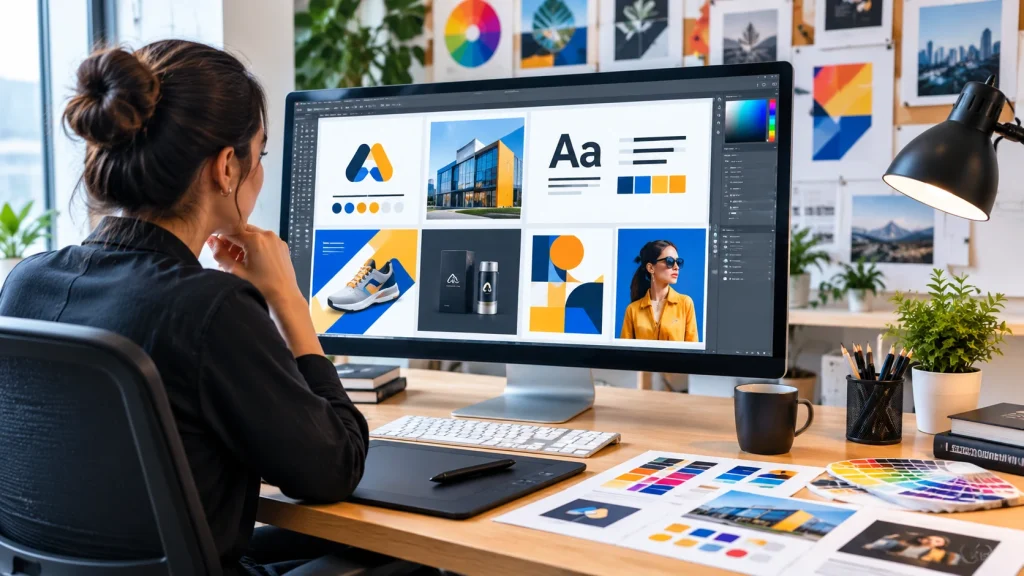
Table of Contents
What Is Graphic Design?
Graphic design is the process of combining visual elements, such as typography, images, colors, shapes, and layouts, to communicate information, express ideas, or influence an audience. It brings artistic creativity and strategic thinking together to create visual content that serves a specific purpose.
Graphic designers use these elements to develop materials such as logos, posters, brochures, advertisements, packaging, websites, presentations, and social media graphics.
The main goal of graphic design is not simply to make something look attractive. It is to make information easier to understand, communicate a message clearly, and create a visual experience that connects with the intended audience.
For example, a restaurant may use graphic design to create a recognizable logo, an appealing menu, and promotional graphics that encourage customers to visit. Each design serves a different purpose while maintaining a consistent visual identity.
Define Graphic Design in Art
In art, graphic design is a creative discipline that uses visual elements to communicate a message, represent an idea, or convey information through a planned composition. It combines artistic expression with communication principles to create visuals that are both meaningful and functional.
Unlike artwork created primarily for personal expression or aesthetic appreciation, graphic design usually responds to a particular communication goal. Designers consider the audience, message, medium, and intended outcome before creating a visual composition.
Graphic design in art may include:
- Typography: Using letters and fonts to communicate information and establish visual hierarchy.
- Illustration: Creating drawings or visual representations to explain concepts or tell stories.
- Composition: Arranging visual elements to create balance, structure, and clarity.
- Color: Using color combinations to establish mood, improve visibility, and support brand identity.
- Imagery: Selecting or creating photographs and graphics that reinforce the message.
These techniques allow designers to transform abstract ideas into visual messages that people can recognize and understand.
Define Graphic Design in Your Own Words
In simple words, graphic design means using pictures, colors, text, shapes, and layouts to communicate an idea in a clear and attractive way.
Imagine you want to promote a new clothing brand. You create a logo, choose brand colors, select suitable fonts, and design social media posts that show your products. Together, these visual materials communicate your brand’s personality and help customers recognize your business.
That is graphic design in practice.
A simple definition you can use for an assignment is:
Graphic design is the creative process of arranging text, images, colors, and other visual elements to communicate information, express ideas, and solve visual communication problems.
This definition covers both the artistic and practical sides of graphic design.
Graphic Design Definition: Dictionary Meaning and General Description
The dictionary meaning of graphic design generally refers to the art or practice of planning and creating visual material to communicate information or ideas. It involves combining graphic elements into a purposeful visual arrangement.
In professional practice, graphic design goes beyond creating individual images. It involves making decisions about how information should look, how it should be organized, and how an audience will interpret it.
A complete description of graphic design includes three important aspects:
- Visual communication: Sharing information through images, typography, symbols, and layouts.
- Creative problem-solving: Finding an effective visual way to communicate a specific message.
- Purposeful design: Creating visuals that support a goal, such as informing, educating, promoting, or identifying a brand.
Graphic design can be used in traditional print media, digital platforms, advertising, education, publishing, entertainment, and many other industries.
What Is the Function of Graphic Design?
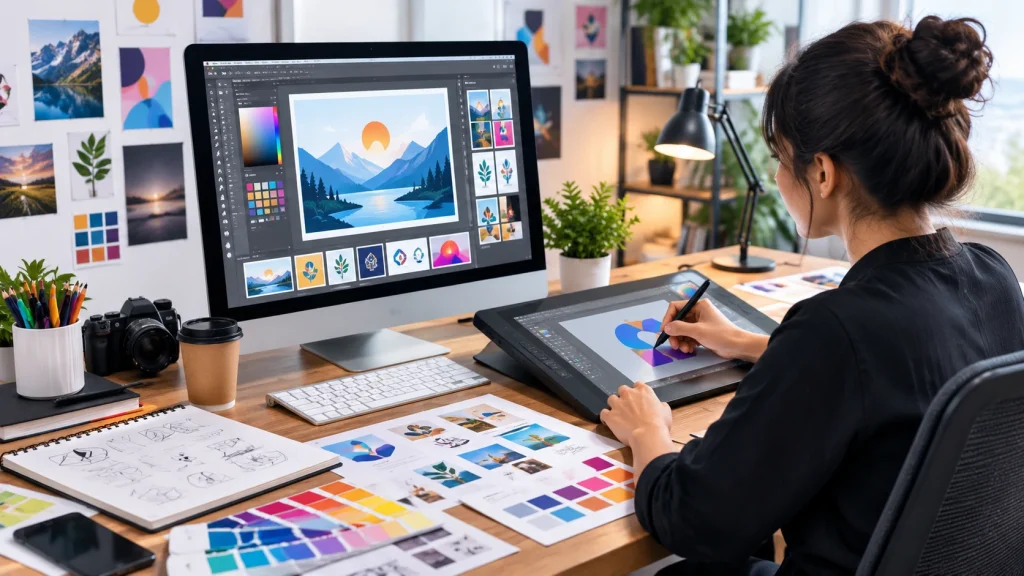
The function of graphic design is to communicate messages visually and make information more accessible, memorable, and engaging. Designers create visuals according to the needs of a project, ensuring that the final result serves its intended purpose.
Although the exact function varies from one project to another, several important functions apply to most graphic design work.
1. Communication
One of the primary functions of graphic design is to communicate information effectively. A well-designed visual can explain an idea more quickly than a long block of text.
For example, an infographic can present research findings through charts, icons, and short explanations, allowing readers to understand important information more easily.
2. Branding and Identity
Graphic design helps businesses develop a recognizable identity. Logos, brand colors, typography, packaging, and marketing materials work together to create a consistent visual image.
A strong visual identity helps customers distinguish one business from its competitors and recognize its products or services across different platforms.
3. Advertising and Promotion
Businesses use graphic design to promote products, services, events, and special offers. Advertisements, promotional banners, social media posts, and brochures are created to attract attention and encourage audiences to take action.
Effective promotional design combines a clear message with suitable visuals and a strong visual hierarchy.
4. Education and Information
Graphic design supports learning by organizing complicated information into understandable visual formats. Educational posters, diagrams, presentation slides, and instructional graphics help learners process and remember information.
For instance, a step-by-step diagram can make a technical process easier to follow.
5. User Experience and Navigation
Digital graphic design helps people interact with websites, applications, and digital products. Clear icons, readable text, consistent layouts, and recognizable visual controls make digital experiences easier to navigate.
Although user experience design is a broader discipline, graphic design contributes significantly to the visual clarity and usability of digital interfaces.
6. Emotional Connection
Colors, imagery, typography, and composition can influence how people perceive a message. A carefully designed visual can communicate excitement, trust, elegance, friendliness, or urgency.
Designers use these visual choices to create an appropriate emotional response without losing sight of the project’s purpose.
Main Functions of Graphic Design at a Glance
| Function | Main purpose | Example |
|---|---|---|
| Communication | Explain ideas clearly | Infographics |
| Branding | Build visual recognition | Company logos |
| Marketing | Promote products or services | Advertising banners |
| Education | Support learning | Educational diagrams |
| Navigation | Improve visual usability | Website icons |
| Emotional engagement | Establish mood and connection | Campaign graphics |
Each function contributes to the overall effectiveness of graphic design, whether the final product is printed, displayed on a screen, or shared online.
Characteristics of Graphic Design
The characteristics of graphic design are the qualities that make visual communication clear, purposeful, and effective. While individual styles may differ, successful designs commonly share several characteristics.
Clarity
A design should communicate its message without creating unnecessary confusion. Text, images, and other elements should be easy to recognize and understand.
Visual Hierarchy
Visual hierarchy guides the viewer’s attention by establishing which information is most important. Designers use size, color, contrast, spacing, and positioning to help audiences navigate a composition.
Balance and Composition
Balance refers to how visual weight is distributed throughout a design. Symmetrical arrangements can create a formal appearance, while asymmetrical arrangements can create movement and visual interest.
Consistency
Consistent colors, typography, spacing, and graphic styles create a unified appearance. This is especially important for businesses that use multiple marketing materials.
Creativity
Creative thinking helps designers communicate familiar ideas in fresh and memorable ways. However, creativity should support the communication objective rather than make the design difficult to understand.
Functionality
Graphic design should work for its intended medium and audience. A poster must be readable from an appropriate distance, while a website graphic should remain clear on different screen sizes.
Audience Relevance
Effective design considers the people who will see it. Designers choose visual styles, language, imagery, and layouts according to the audience’s needs and expectations.
Key Aspects of Graphic Design
The aspects of graphic design are the different considerations that influence how a visual project is planned, created, and evaluated.
Visual aesthetics: The appearance of the design, including its colors, shapes, typography, and overall style.
Communication strategy: The message the design needs to convey and the response it should encourage.
Audience understanding: Knowledge of the intended viewers, their expectations, and the context in which they will see the design.
Technical execution: The practical skills required to create, edit, export, and prepare design files for print or digital use.
Accessibility and readability: Making sure that text, colors, and visual information can be understood by as many people as reasonably possible.
Brand consistency: Ensuring that the design follows the visual identity and communication standards of the business or organization.
Considering these aspects helps designers make decisions that go beyond appearance and focus on the overall effectiveness of the final product.
Components of Graphic Design
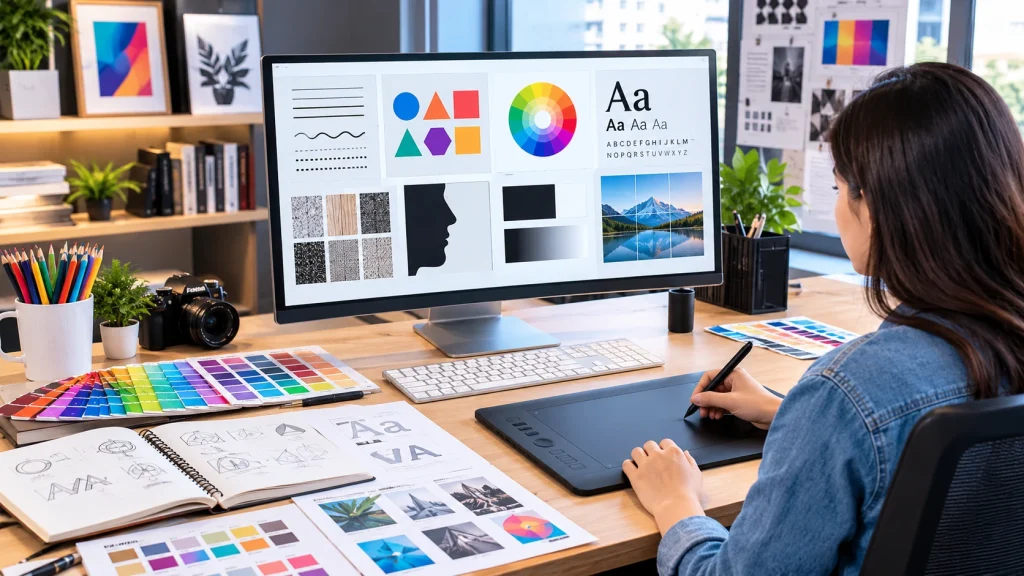
The components of graphic design are the visual building blocks used to create a composition. Understanding these components helps beginners learn how different design choices affect the final result.
1. Line
Lines create boundaries, divide sections, direct attention, and connect different parts of a composition. They can be straight, curved, thick, thin, horizontal, or vertical.
2. Shape
Shapes are two-dimensional forms such as circles, squares, triangles, and custom illustrations. They help organize layouts, create symbols, and establish visual patterns.
3. Color
Color influences visual emphasis, mood, contrast, and brand recognition. Designers consider color relationships, accessibility, and the context in which a design will appear.
4. Typography
Typography is the selection and arrangement of text. Font style, size, weight, spacing, and alignment affect readability and the personality of a design.
5. Texture
Texture creates the impression of a surface or adds visual depth. Designers may use subtle grain, paper-like effects, patterns, or realistic textures to support a particular style.
6. Space
Space refers to the areas surrounding and between design elements. White space, also called negative space, helps prevent clutter and allows important content to stand out.
7. Imagery
Photographs, illustrations, icons, and other visual assets help communicate ideas and make information more engaging.
8. Size and Scale
The size of an element affects its prominence and relationship with other elements. Larger elements often attract attention first, while smaller elements can provide supporting information.
9. Contrast
Contrast creates visible differences between elements, such as light and dark colors, large and small text, or thick and thin lines. It improves visual distinction and helps establish hierarchy.
These components often work together rather than independently. A successful design uses them in combination to create a coherent and purposeful visual message.
Elements of Graphic Design PDF: What Should It Include?
Students and beginners often look for an elements of graphic design PDF to use as a quick reference or study guide. A useful guide should explain the major visual elements and provide examples of how each one works in real projects.
A practical graphic design study guide could include:
- Definitions of line, shape, color, texture, space, and form.
- Typography principles and font selection.
- Examples of contrast, alignment, balance, and visual hierarchy.
- Sample logo, poster, and social media compositions.
- Exercises for identifying design elements in existing visuals.
You can use the sections above as a starting point for your own study notes. When preparing a PDF, include simple illustrations and short examples so that the concepts are easier to understand and remember.
What Is General Graphic Design?
General graphic design refers to the broad practice of creating visual communication for different purposes, industries, and media. It covers the fundamental principles and skills that designers use across a wide range of projects.
General graphic design may include logo creation, business cards, brochures, posters, advertisements, presentations, packaging, social media graphics, and digital layouts.
A general graphic designer typically needs an understanding of composition, typography, color theory, image editing, layout design, and the intended audience.
These foundational skills can also help designers specialize in areas such as branding, publication design, advertising, or digital design.
What Is Electronic Graphic Design?
Electronic graphic design refers to creating visual content using digital devices and software. Instead of producing a design exclusively through physical materials, designers work with digital tools to create, edit, and prepare visual assets for screens or other digital applications.
Examples include:
- Website banners and web graphics.
- Social media posts and digital advertisements.
- Mobile application graphics and interface elements.
- Digital presentations and infographics.
- Electronic publications and online promotional materials.
- Digital illustrations and visual assets for multimedia projects.
Common tools include Adobe Photoshop, Adobe Illustrator, Adobe InDesign, Figma, and Canva. The right tool depends on the project and the type of output required.
Electronic graphic design requires attention to screen readability, image resolution, file formats, color display, and responsive layouts. Designers may also need to optimize image sizes so that websites and digital platforms load efficiently.
What Is a Graphic Design Approach?
A graphic design approach is the method a designer follows to understand a problem, develop ideas, select visual elements, and produce an effective final design.
A structured approach helps ensure that creative decisions support the project’s objectives.
Step 1: Understand the Brief
Identify the project’s purpose, target audience, message, deliverables, and requirements. For example, a logo for a children’s clothing brand may need a different visual style from a logo for a corporate law firm.
Step 2: Research and Gather Inspiration
Explore the industry, audience expectations, competing brands, and relevant design references. Research should guide creative decisions rather than encourage copying existing work.
Step 3: Develop Initial Concepts
Create sketches, mood boards, rough layouts, or alternative visual directions. Exploring several concepts can reveal different ways to communicate the same message.
Step 4: Select Design Elements
Choose suitable typography, colors, imagery, shapes, and spacing. Every element should support the message and contribute to the overall composition.
Step 5: Create and Refine the Design
Develop the selected concept using appropriate design software. Review alignment, contrast, readability, hierarchy, consistency, and technical quality.
Step 6: Review and Test
Check the design in its intended context. A social media graphic, for example, should remain readable on a mobile screen, while a printed brochure must be prepared according to the printer’s specifications.
Step 7: Deliver the Final Files
Export the design in the required formats, dimensions, and resolution. Provide editable source files when required and make sure the final assets are suitable for their intended use.
Following this approach gives designers a repeatable process while leaving room for experimentation and creative expression.
Why Is Graphic Design Important in Modern Business?
Graphic design helps businesses communicate their value, build recognition, and present information professionally. In competitive markets, visual presentation often shapes a customer’s first impression of a company.
A consistent visual identity can make a business easier to recognize across its website, advertisements, packaging, and social media accounts. Well-organized marketing graphics can also help customers understand products and services more quickly.
For online businesses, graphic design supports website presentation, promotional campaigns, landing pages, and digital content. For physical businesses, it can improve signage, menus, brochures, packaging, and other printed materials.
However, attractive visuals alone do not guarantee business success. Effective graphic design works best when it is combined with a clear message, a suitable audience strategy, and a strong product or service.
Graphic Design vs. Fine Art
Graphic design and fine art share many creative techniques, but they often differ in their primary objectives.
| Feature | Graphic Design | Fine Art |
|---|---|---|
| Main purpose | Communicate a message or solve a visual problem | Express ideas, emotions, or artistic perspectives |
| Audience | Often defined by a project or client | May be broad or self-selected |
| Constraints | Frequently follows a brief, brand, or format | May have greater freedom of expression |
| Typical output | Logos, advertisements, layouts, packaging | Paintings, sculptures, and other artworks |
| Success criteria | Clarity, relevance, usability, and effectiveness | May emphasize interpretation, expression, and artistic merit |
These categories can overlap. Graphic design can be highly artistic, and fine art can communicate specific messages. The distinction mainly concerns the purpose and context of the work.
Frequently Asked Questions About Graphic Design
1. What is the simplest definition of graphic design?
Graphic design is the practice of combining text, images, colors, and other visual elements to communicate ideas and information effectively.
2. What is the main function of graphic design?
Its main function is visual communication. It helps people understand messages, recognize brands, learn information, and respond to promotional content.
3. What are the five basic elements of graphic design?
Five commonly taught elements are line, shape, color, texture, and space. Other important elements include typography, imagery, and form.
4. What are the main characteristics of good graphic design?
Good graphic design is clear, purposeful, visually organized, consistent, readable, creative, and appropriate for its intended audience.
5. What is electronic graphic design?
Electronic graphic design is the creation of visual content using digital tools for websites, applications, social media, digital advertising, presentations, and other electronic media.
6. What is the difference between graphic design and digital art?
Graphic design usually focuses on communicating a specific message or meeting a visual communication goal. Digital art is a broader category of artwork created or presented using digital technology and may focus more on artistic expression.
7. What software do graphic designers use?
Popular options include Adobe Photoshop, Adobe Illustrator, Adobe InDesign, Figma, and Canva. Designers choose software based on whether they are creating illustrations, layouts, brand assets, or digital interfaces.
8. Can beginners learn graphic design?
Yes. Beginners can start by learning typography, color theory, composition, spacing, and visual hierarchy. Practicing with simple posters, social media graphics, and logos can help build foundational skills.
Conclusion
Graphic design is the practice of combining creativity, visual elements, and communication principles to deliver meaningful messages. Its definition extends beyond creating attractive images because effective design must also serve a clear purpose and meet the needs of its intended audience.
Understanding the functions, characteristics, aspects, and components of graphic design provides a strong foundation for anyone interested in visual communication. From traditional print materials to modern digital graphics, these principles help designers create work that is clear, consistent, and effective.
Whether you want to study graphic design, develop a professional skill, or improve your business’s visual identity, learning these fundamentals is an important first step toward creating better designs.